Keeping your washing machine clean is essential for maintaining its performance and ensuring your clothes come out fresh every time. While it cleans your clothes, the machine itself can accumulate soap scum, dirt, and mold over time. In this comprehensive guide, we will provide step-by-step instructions on how to clean your washing machine—whether it’s a front loader, top loader, Samsung, or GE model—to remove odors and grime effectively.
Why Cleaning Your Washing Machine Is Important
Hygiene
Washing machines, especially front loaders, can trap moisture in seals and gaskets. This creates a breeding ground for mold and bacteria, which can transfer to your clothes and cause skin irritation.
Performance
Soap scum and mineral buildup can clog the inner workings of your machine, including the filter and drain pipes. A clean machine washes more efficiently and ensures your detergent works as intended.
Longevity
Proper maintenance extends the lifespan of your appliance. Regular cleaning prevents corrosion and mechanical issues caused by buildup, saving you from expensive repairs or early replacement.
Essential Cleaning Supplies
Basic Supplies
- White Vinegar: A natural cleaner that breaks down mineral deposits and kills bacteria.
- Baking Soda: Excellent for scrubbing and neutralizing odors in a smelly washing machine.
- Microfiber Cloth: For wiping down the exterior, drum, and seals without scratching.
- Old Toothbrush: Essential for scrubbing the detergent drawer and tight crevices.
Optional Supplies
- Bleach: For killing severe mold infestations (use cautiously and never mix with vinegar).
- Commercial Washer Cleaner: Tablets or liquids designed specifically for monthly maintenance.
Step-by-Step Cleaning Guide
Clean the Detergent Drawer
Remove the detergent dispenser drawer. Soak it in warm soapy water and use an old toothbrush to scrub away hardened soap and fabric softener residue. Wipe the drawer slot inside the machine before reinserting the dispenser.
Clean the Rubber Gasket (Front Loaders)
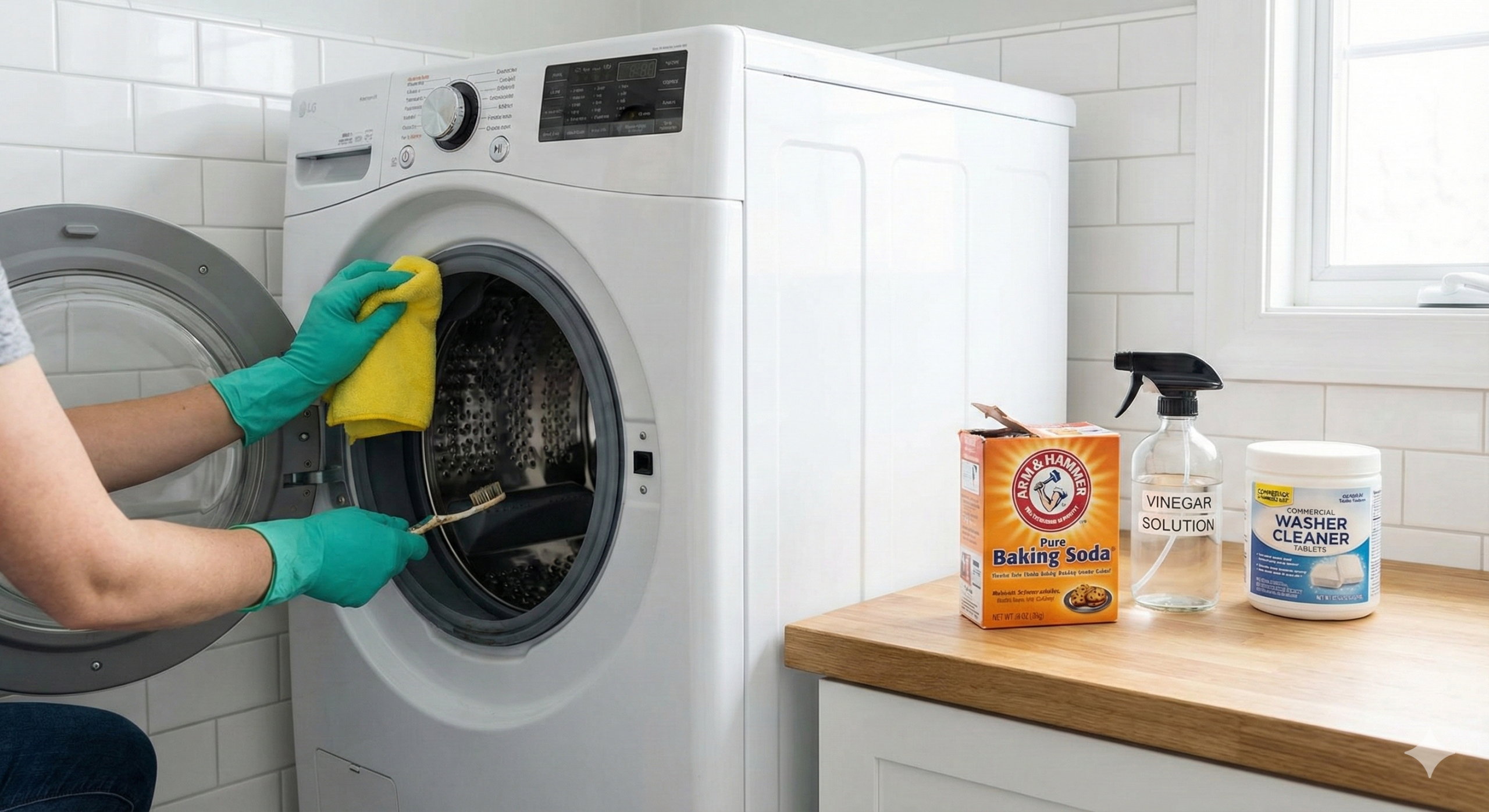
This is the most common spot for mold. Pull back the rubber seal around the door. Remove any trapped lint or debris. Wipe the area thoroughly with a cloth dipped in white vinegar. If you spot mold, let the vinegar sit for 15 minutes before scrubbing.
Clean the Filter
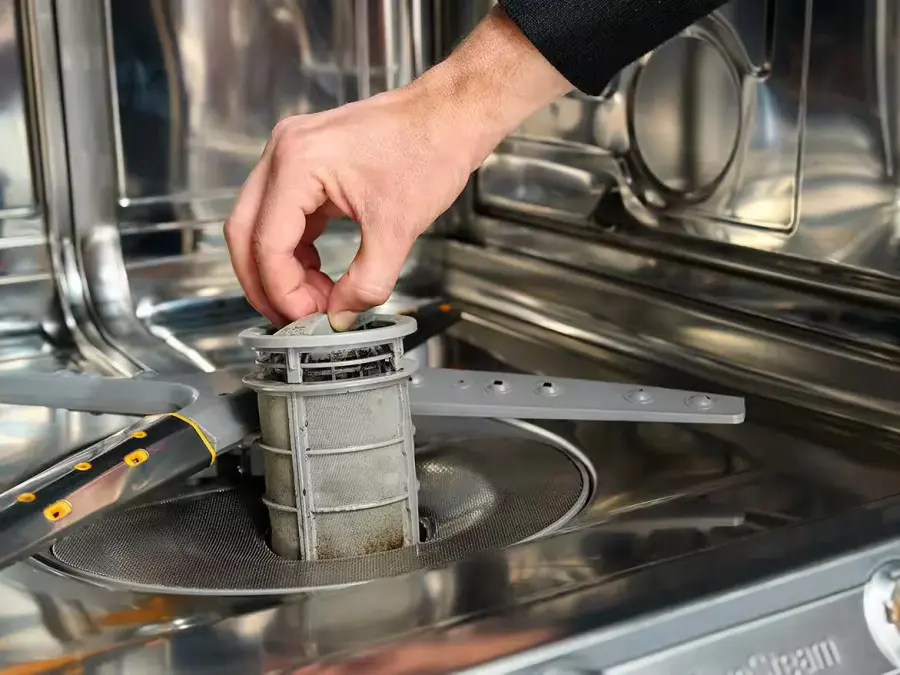
Many people ask how to clean a washer machine filter because they forget it exists! Locate the filter (usually behind a small door at the bottom front of the machine). Place a towel down, unscrew the cap to drain excess water, and remove the filter. Rinse it under hot water and remove any coins, lint, or hair before replacing it.
Run a Cleaning Cycle
- With Vinegar: Pour two cups of white vinegar into the detergent dispenser (or directly into the drum for top loaders). Run the machine on the hottest, longest cycle available.
- With Baking Soda: After the vinegar cycle finishes, sprinkle half a cup of baking soda into the drum and run a second hot cycle. This helps scrub away loosened grime and neutralizes acidic odors.
Wipe Down the Exterior
While the cycle runs, wipe down the controls, handle, and exterior of the machine using a damp microfiber cloth and mild detergent.
Advanced Cleaning Techniques & Troubleshooting
How to Clean a Smelly Washing Machine
If your machine smells like mildew or rotten eggs, it is likely due to trapped moisture.
The Fix: Use the vinegar and baking soda method described above. Afterward, ensure you leave the washing machine door open between uses to allow the drum to dry out completely.
How to Clean a Moldy Washing Machine
Mold requires stronger measures.
The Fix: Make a paste of baking soda and water for mild spots. For stubborn black mold on the gasket, you may need to run a cycle with bleach (ensure no vinegar is present) or use a specialized mold remover.
Cleaning Top Loading vs. Front Loading
- Front Loaders: Focus heavily on the rubber gasket and the glass door, as these areas trap the most water.
- Top Loaders: Focus on the agitator (the center post). You may need to remove the cap of the agitator to clean out debris trapped underneath.
Common Cleaning Mistakes to Avoid
Using Too Much Detergent
Excess detergent doesn’t make clothes cleaner; it leaves a residue that attracts dirt and leads to mold growth. Stick to the manufacturer’s recommended amount.
Ignoring the Filter
Failing to clean the filter can lead to drainage issues and bad smells. Check your filter every 3–4 months.
Closing the Door Immediately
Never close the washer door right after a cycle. Air circulation is vital for preventing mold and mildew growth.
Regular Maintenance Tips
- Leave the Door Ajar: Always let the drum air dry after every load.
- Wipe the Seal: Quickly wipe the rubber gasket after every wash to remove pooling water.
- Monthly Clean: Run a maintenance cycle with vinegar or a cleaning tablet once a month to keep the machine fresh.
Keeping your washing machine clean is crucial for hygiene and efficiency. By following this guide, you can eliminate odors, prevent mold, and ensure your appliance lasts for years to come.